
Flood Insurance
Call Us: 603-766-3733
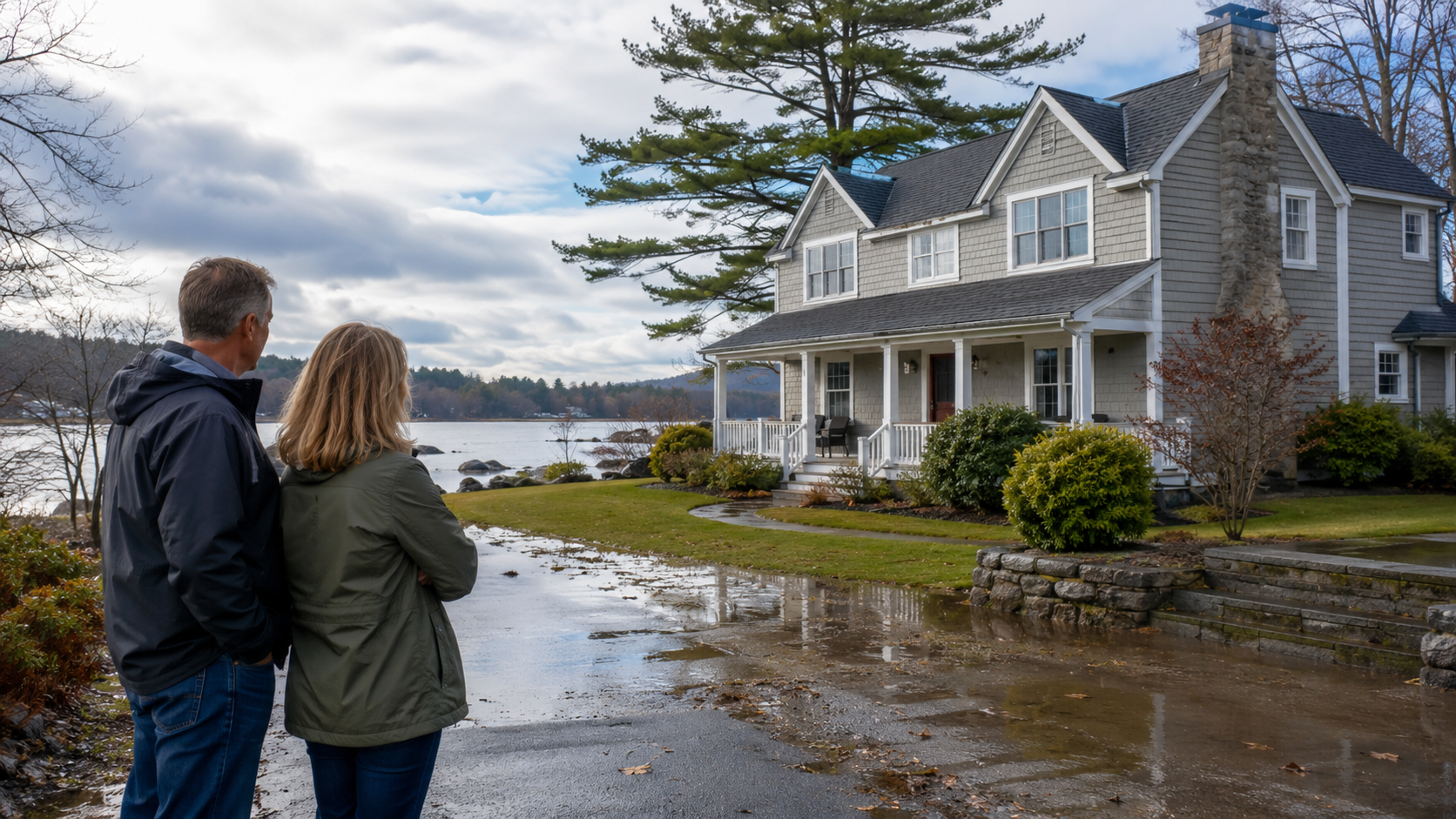
A single storm can erase decades of equity in a matter of hours. Between 2010 and 2023, floods caused
$144 billion in damage, yet only about 35% of those losses were insured. That gap represents real families watching floodwater destroy their homes with no financial safety net. If you own property - especially a high-value home - understanding flood insurance is not optional. It's the difference between rebuilding on your terms and scrambling for disaster loans. This guide breaks down the critical differences between NFIP and private flood coverage, what your policy actually covers, how waiting periods can catch you off guard, and why your premium depends heavily on where your home sits relative to water. Whether you're buying your first policy or reassessing an existing one, the details here will help you make a genuinely informed decision.
Understanding Flood Insurance Fundamentals and Necessity
Flood damage is the most common and costly natural disaster in the United States, yet most property owners drastically underestimate their exposure. Even homes outside designated high-risk zones file roughly 25% of all NFIP claims. A few inches of water in a finished basement can easily cause $50,000 or more in damage, and for homes valued above $1.5 million, the financial exposure climbs dramatically.
Why Standard Homeowners Policies Exclude Flooding
Your homeowners policy covers a lot of things. Flooding is not one of them. This catches people off guard every single year. Standard policies exclude surface water, storm surge, and overflow from bodies of water because the risk is too concentrated geographically. Insurers can't profitably pool flood risk the way they pool fire or theft risk because entire neighborhoods get hit simultaneously. That's why flood coverage requires a separate, standalone policy - either through the federal government or a private carrier. No exceptions, no riders, no endorsements on your homeowners policy will cover rising water.
The Role of FEMA and the National Flood Insurance Program (NFIP)
Congress created the NFIP in 1968 after private insurers largely abandoned the flood market. FEMA administers the program, which provides federally backed flood insurance to property owners in participating communities. About 23,000 communities participate, and the program currently holds roughly 4.7 million policies. The NFIP sets standardized coverage forms, pricing structures, and claims procedures. For decades, it was essentially the only option for most homeowners. That's changed significantly in recent years, but the NFIP remains the baseline against which every private flood product is measured.

By: Tod O’Dowd, CIC, CAPI
President of Avery Insurance Agency
NFIP vs. Private Flood Insurance: Key Differences
The private flood insurance market has been growing fast. Private residential flood policies have been expanding at a 20% annual growth rate since 2020, and for good reason: private carriers often offer broader coverage, higher limits, and competitive pricing. But the choice between NFIP and private flood isn't straightforward for every homeowner.
Comparison of Backing and Financial Stability
The NFIP is backed by the full faith and credit of the U.S. government. It won't go insolvent in a way that leaves you without a claim payment. Private flood insurers, on the other hand, are backed by their own reserves, reinsurance arrangements, and state guaranty funds. Most reputable private carriers are financially strong, but you should verify their AM Best rating before buying. A-rated carriers with solid reinsurance programs are your safest bet on the private side.
| Feature | NFIP | Private Flood |
|---|---|---|
| Backing | U.S. federal government | Private capital + reinsurance |
| Max Building Coverage | $250,000 residential | $1M+ available |
| Max Contents Coverage | $100,000 | $500K+ available |
| Waiting Period | 30 days standard | Typically 10-15 days |
| Replacement Cost | Limited availability | Commonly included |
| Loss of Use | Not covered | Often included |
Flexibility in Policy Customization and Add-ons
NFIP policies follow a rigid, standardized form. You get what you get. Private flood policies, by contrast, can be tailored significantly. Many private carriers include replacement cost coverage on both the building and contents, loss-of-use coverage if you're displaced, and basement contents coverage that NFIP largely excludes. For homeowners with properties valued well above the NFIP's $250,000 building limit, private flood insurance isn't just a nice option - it's often the only way to get adequate protection. An agency like Avery Insurance Agency, which has spent over 125 years building tailored protection portfolios, can help you evaluate which structure best fits your property and risk profile.
Coverage Limits and Policy Exclusions
Understanding what your policy actually pays for - and what it doesn't - prevents ugly surprises after a flood event. Both NFIP and private policies have specific boundaries that matter.
Building Property vs. Personal Contents Coverage
NFIP splits coverage into two buckets: building property (up to $250,000 for residential) and personal contents (up to $100,000). These are purchased separately, and many homeowners make the mistake of skipping contents coverage to save on premium. Building coverage includes the structure itself, electrical and plumbing systems, permanently installed fixtures, and major appliances like water heaters and furnaces. Contents coverage handles furniture, clothing, electronics, and portable appliances. One critical gap: NFIP does not cover finished basement improvements. That custom home theater or wine cellar below grade? Not covered under the standard NFIP form.
The Excess Flood Insurance Marketplace for High-Value Homes
If your home is worth $800,000, $1.5 million, or more, the NFIP's $250,000 building cap leaves you massively underinsured. Excess flood policies sit on top of your NFIP or primary private policy to close that gap. The
global flood insurance market is projected to grow from $14.43 billion in 2025 to $17.46 billion in 2026, driven partly by demand for higher-limit products. Excess flood carriers typically require you to maintain a primary policy at maximum NFIP limits before their coverage kicks in. For owners of high-value coastal or riverfront properties, this layered approach is the standard recommendation. At Avery Insurance Agency, this is exactly the kind of vulnerability assessment their consultative approach is designed to uncover - making sure no coverage gap goes unnoticed.
Waiting Periods and Timing Your Purchase
Timing matters more than most people realize. You cannot buy flood insurance on Tuesday and file a claim on Wednesday. Every flood policy has a built-in waiting period, and if you're caught without coverage when a storm hits, there's no retroactive fix.
The Standard 30-Day NFIP Waiting Period
NFIP policies carry a 30-day waiting period, while private flood insurance usually requires about two weeks before coverage takes effect. That 30-day NFIP window is non-negotiable in most circumstances. If hurricane season starts June 1 and you buy your policy May 15, you're covered by mid-June. Buy it June 5, and you're exposed until early July. The lesson is simple: don't wait for a storm to appear on radar. By then, it's too late.
Exceptions for Loan Closings and Map Revisions
There are a few narrow exceptions to the 30-day rule. If you're purchasing or refinancing a home and your lender requires flood insurance, the policy can take effect immediately at closing. If your community has been newly mapped into a Special Flood Hazard Area, you also get a shorter waiting period. These exceptions exist specifically to prevent gaps during real estate transactions, not to let homeowners dodge the waiting period strategically. Private carriers sometimes offer shorter waiting periods as a competitive advantage, typically ranging from 10 to 15 days.
Your flood zone designation has historically been the single biggest factor in your premium. FEMA's updated rating methodology has changed that equation, but zones still matter significantly.
How Flood Zones (SFHAs) Affect Your Premiums
FEMA designates Special Flood Hazard Areas (SFHAs) on its Flood Insurance Rate Maps. Zones starting with "A" or "V" indicate high-risk areas with at least a 1% annual chance of flooding. If your home falls in an SFHA, your mortgage lender will require flood insurance. Properties in moderate-risk zones (B and X-shaded) and low-risk zones (C and X-unshaded) don't face mandatory purchase requirements but are far from immune to flooding. Rising construction costs and economic uncertainty underscore the importance of proactive risk management and adequate coverage regardless of your zone designation.
Modern Methodology: Distance to Water and Elevation Factors
FEMA's Risk Rating 2.0, implemented in October 2021, moved beyond simple zone-based pricing. The new methodology considers your property's distance to a water source, the type of flooding you face (river, coastal, heavy rainfall), your home's elevation relative to the flood source, and the cost to rebuild your specific structure. Some homeowners in high-risk zones actually saw premiums decrease under Risk Rating 2.0, while others in historically "low-risk" areas saw increases. The system is more granular and arguably more fair, but it has created sticker shock for certain property owners who were previously undercharged relative to their actual risk.
Strategies for Reducing Flood Insurance Costs
You're not stuck paying whatever premium lands in your mailbox. Several proven strategies can meaningfully reduce your costs. Communities participating in FEMA's Community Rating System can earn NFIP rate discounts ranging from 5% to 45% based on local floodplain management efforts. Check whether your community participates.
- Get an Elevation Certificate: if your home sits higher than the base flood elevation, an EC can document that and lower your premium substantially.
- Compare NFIP and private quotes: don't assume one is always cheaper. Private carriers often beat NFIP pricing for lower-risk properties.
- Increase your deductible: moving from a $1,000 to a $5,000 or $10,000 deductible can cut premiums by 15-30%.
- Mitigate your property: installing flood vents, elevating utilities above base flood elevation, or adding backflow valves can qualify you for lower rates.
- Request a Letter of Map Amendment (LOMA): if your property was incorrectly mapped into a high-risk zone, a successful LOMA can remove the mandatory purchase requirement entirely.
Working with a knowledgeable independent agency ensures you're comparing apples to apples across NFIP and private options rather than guessing at what coverage you actually need.
Frequently Asked Questions
Do I need flood insurance if I'm not in a high-risk zone? About 40% of NFIP claims come from outside high-risk zones. If you have a mortgage, your lender may not require it, but that doesn't mean you're safe. A policy for moderate-risk properties can cost as little as $400-$600 per year.
Can I switch from NFIP to private flood insurance mid-policy? Yes. You can cancel your NFIP policy and receive a prorated refund. Just make sure your private policy is active before canceling to avoid a coverage gap.
Does flood insurance cover my detached garage or pool house? Under NFIP, detached structures on the same property can be covered under your building coverage. Private policies vary, so read the declarations page carefully.
Will my flood insurance pay for temporary housing? NFIP does not include loss-of-use or additional living expense coverage. Most private flood policies do, which is a significant advantage if your home becomes uninhabitable.
How do I know my exact flood zone? Visit FEMA's Flood Map Service Center and enter your address. Your insurance agent can also pull this information and explain what it means for your coverage requirements and pricing.
Making the Right Coverage Decision
Flood insurance is one of those purchases that feels unnecessary right up until the moment it becomes the most important financial decision you ever made. The gap between what floods destroy and what gets reimbursed is staggering, and it doesn't have to include your property. Whether you go with NFIP, a private carrier, or a layered approach combining both, the key is acting before you need it. Review your flood zone, understand your coverage limits, and don't let the waiting period catch you off guard. If you want a second set of eyes on your exposure, Avery Insurance Agency's team can walk you through a full vulnerability assessment and build a flood protection strategy matched to your home, your assets, and your peace of mind. That's the kind of proactive planning that lets you sleep at night, even during hurricane season.
ABOUT THE AUTHOR:
Tod O’Dowd, CIC, CAPI
I'm the President of Avery Insurance Agency, a family-owned independent agency serving individuals and businesses across New England and in 40+ states. With a hands-on, consultative approach to personal and commercial risk, I help clients — from high-net-worth homeowners and contractors to restaurant owners and property managers — find the right coverage without the guesswork of working with a single-carrier agent.
What Our Clients Say
Trusted by Families and Businesses for Over a Century
Trusted by New Hampshire Families and Businesses for Over a Century

Your Life. Protected.
Complete Personal Insurance for Individuals Who Expect More
One Agency. Every Coverage You Need. No Gaps, No Surprises.
Home Insurance
Your home is your most valuable asset. Avery’s home insurance protects your property, belongings, and liability so you can feel secure no matter what happens.
High-Value Home Insurance
Own a home valued over $2 million? Our Premier Client Services program provides coverage built around high-value properties and the unique risks they carry.
Auto Insurance
Whether you drive a daily commuter, a classic car, or a motorcycle, Avery finds the right auto coverage for your vehicle and your budget.
Boat & Watercraft Insurance
From small boats on New Hampshire’s lakes to luxury yachts, Avery provides watercraft insurance covering your vessel, passengers, and liability on the water.
Umbrella / Personal Liability Insurance
An umbrella policy adds an extra layer of liability protection above your home and auto coverage. One of the most cost-effective ways to protect your financial future.
Valuable Possessions Insurance
Jewelry, art, collectibles, and other high-value items need coverage beyond a standard homeowners policy. Avery insures your most prized possessions at full appraised value.
Protect Your Business & Livelihood
Commercial Insurance Solutions Designed for New England Businesses.
Comprehensive Commercial Coverage That Keeps Your Business Running
General Liability Insurance
Protect your business from third-party claims of bodily injury, property damage, and personal injury. General liability is the foundation of any solid business insurance program.
Commercial Property Insurance
Covers your building, equipment, inventory, and other physical assets against fire, theft, vandalism, and other covered losses. Keep your business protected from the unexpected.
Workers’ Compensation Insurance
Workers’ comp covers medical costs and lost wages when an employee is injured on the job. Avery helps businesses meet state compliance requirements and manage costs effectively.
Cyber Liability Insurance
Data breaches and cyberattacks are a growing risk for businesses of all sizes. Cyber liability covers response costs, legal fees, and customer notification expenses after a security incident.
Employment Practices Liability Insurance
Covers your business against employee claims of wrongful termination, discrimination, harassment, and related issues. Essential for any business with employees.
Commercial Auto Insurance
Whether a single truck or a full fleet, commercial auto insurance protects your business against accidents, damage, and liability on the road.
We Know Your Industry
Tailored Insurance Programs for the Industries That Drive New Hampshire
We Understand the Risks Your Industry Faces — and How to Manage Them
Contractors Insurance
From general contractors to specialty trades, Avery understands the unique liability and property exposures your business faces on every job site in New England. We build coverage programs that keep your crew and company protected.
Restaurants & Hospitality
Restaurants, hotels, and marinas face distinct risks — from slip-and-fall liability to liquor liability and food spoilage. Avery designs coverage programs for the specific needs of the hospitality industry.
Real Estate & Property
Whether you own a portfolio of investment properties or manage a condo association, Avery provides the right mix of property, liability, and management coverage to protect your real estate investments.
We Make It Simple
Getting Covered with Avery Is Easy

Step 01
Connect with an Avery Advisor
Call, email, or request a coverage online and we will respond the same business day.

Step 02
We Build Your Coverage Plan
We shop top-rated carriers, compare your options, and recommend the best fit for your needs.

Step 03
You Get Protected and Stay Protected
We place your coverage, review it annually, and advocate for you if you ever need to file a claim.
Let’s Clear Things Up
Got Questions? We’ve Got Answers.
Straight Answers From the Advisors Who Know This State Best
What does it mean that Avery is an independent insurance agency?
An independent agency like Avery is not tied to any single insurance company. We represent multiple top-rated carriers, which means we can shop the market on your behalf and recommend the coverage that truly fits your needs — not the one that benefits any single insurer.
This independence gives you access to more options and unbiased advice. Our advisors are compensated to serve your interests, not to push a specific product. That is a significant advantage over captive agents who can only offer one carrier’s policies.
How much does it cost to work with an Avery advisor?
There is no direct cost to you for working with an Avery advisor. Independent agents are compensated through commissions paid by the insurance carriers when a policy is placed. You receive expert guidance, market comparisons, and ongoing service at no extra charge.
In fact, many clients find that working with Avery saves them money. Our advisors know how to identify the right coverage levels so you are not paying for protection you do not need, and you are not left exposed where you do.
Does Avery help with claims?
Yes — and this is one of the most important things that sets Avery apart. When you have a claim, our in-house claims advisors go to work for you. We guide you through the process, communicate with the insurance company, and advocate for a fair and timely outcome.
Several of our team members hold professional claims designations, including AIC and AINS. We do not just help you file paperwork — we actively represent your interests to make sure you receive the full benefit your policy provides.
Where in New Hampshire does Avery provide coverage?
Avery serves clients throughout the state of New Hampshire from our offices in Wolfeboro and Portsmouth. Whether you live in the Lakes Region, the Seacoast, the White Mountains, or the Merrimack Valley, an Avery advisor is ready to help you find the right coverage.
Our advisors understand the specific risks that come with living and doing business in New Hampshire — from harsh winter weather to seasonal watercraft exposure. We apply that local knowledge to every coverage recommendation we make.
How does Avery handle high-value homes and assets?
Avery offers a dedicated Premier Client Services program for clients with homes valued over .5 million, significant investment portfolios, fine art collections, jewelry, yachts, and other complex assets. This program pairs you with a specialist who understands the unique risks of high-net-worth households.
Through carriers that specialize in high-value personal lines, we provide guaranteed replacement cost coverage, agreed value policies, and comprehensive risk management strategies. Your advisor will conduct a detailed review of your full asset portfolio to make sure nothing is overlooked or underinsured.
How often should I review my insurance coverage?
Avery recommends a full coverage review at least once a year. Major life events — buying a home, starting a business, adding a vehicle, getting married, or making significant home improvements — are all good triggers for an immediate review outside your annual cycle.
Insurance needs change over time, and policies that were right for you a few years ago may leave gaps today. Avery advisors proactively reach out to clients for annual reviews and keep up with changes in the insurance market that could affect your coverage or premium. Our goal is to make sure you are always protected and never paying for coverage that no longer fits.
Insurance Tips & News
Stay Informed with the Avery Blog
Practical Insurance Advice for New Hampshire Families and Business Owners





Contact Us
Portsmouth (HQ)
7 Islington St #102, Portsmouth, NH 03801
Phone Number: 603.766.3733
Wolfeboro
21 S Main Street, Wolfeboro, NH 03894
Phone Number: 603.569.2515